What Actually Kills Termites? Breaking Down the Science
Forget the supermarket bug sprays. If you want to know exactly what kills termites at a structural level, the answer comes down to two highly specific scientific compounds: non-repellent liquid termiticides (like Fipronil) and Insect Growth Regulators (IGRs). One completely shuts down their central nervous system. The other physically stops them from shedding their skin.
Both are engineered for one specific purpose: total nest eradication.
Here is the exact science behind how professional-grade chemicals dismantle a colony from the inside out.
The Heavy Hitters: Active Ingredients
You cannot wipe out a million-strong nest with generic surface poison. You need compounds that actively exploit their biology.
- Fipronil: This is the gold standard for chemical soil barriers. It disrupts the insect's central nervous system. Because it is completely undetectable (non-repellent), the workers tunnel straight through the treated soil without ever realising they are poisoned.
- Insect Growth Regulators (IGRs): Used primarily in baiting stations. Termites have hard exoskeletons. To grow, they must shed their skin (moult). IGRs inhibit the production of chitin, the material they need to form a new shell. When it comes time to moult, a fatal biological failure occurs.
The Speed Trap: Slow vs. Fast Kill
Logic suggests that a fast-acting poison is better. In pest management, instant death is a massive failure.
- If a chemical kills on contact, the dead bugs pile up at the entry point.
- The rest of the colony instantly senses the danger.
- They seal off that tunnel with mud and find a different, untreated route into your timber framing.
- A slow kill is the ultimate weapon. It allows the infected worker to survive just long enough to return to the nest.
The Transfer Effect: A Biological Trojan Horse
This is where the real magic happens. Subterranean species are highly social. They constantly groom each other to stay clean and share liquid food mouth-to-mouth (a process called trophallaxis).
- A worker walks through a treated zone or eats a baited matrix.
- It heads back underground, carrying the lethal dose on its body and in its gut.
- It feeds the soldiers, the nymphs, and most importantly, the queen.
- The poison cascades through the population exponentially. One exposed bug can infect dozens of others before it finally drops.
Why Colony Elimination is the Only Fix
Killing a few thousand workers achieves nothing. The queen can lay up to 30,000 eggs a day. If she survives, your house remains on the menu.
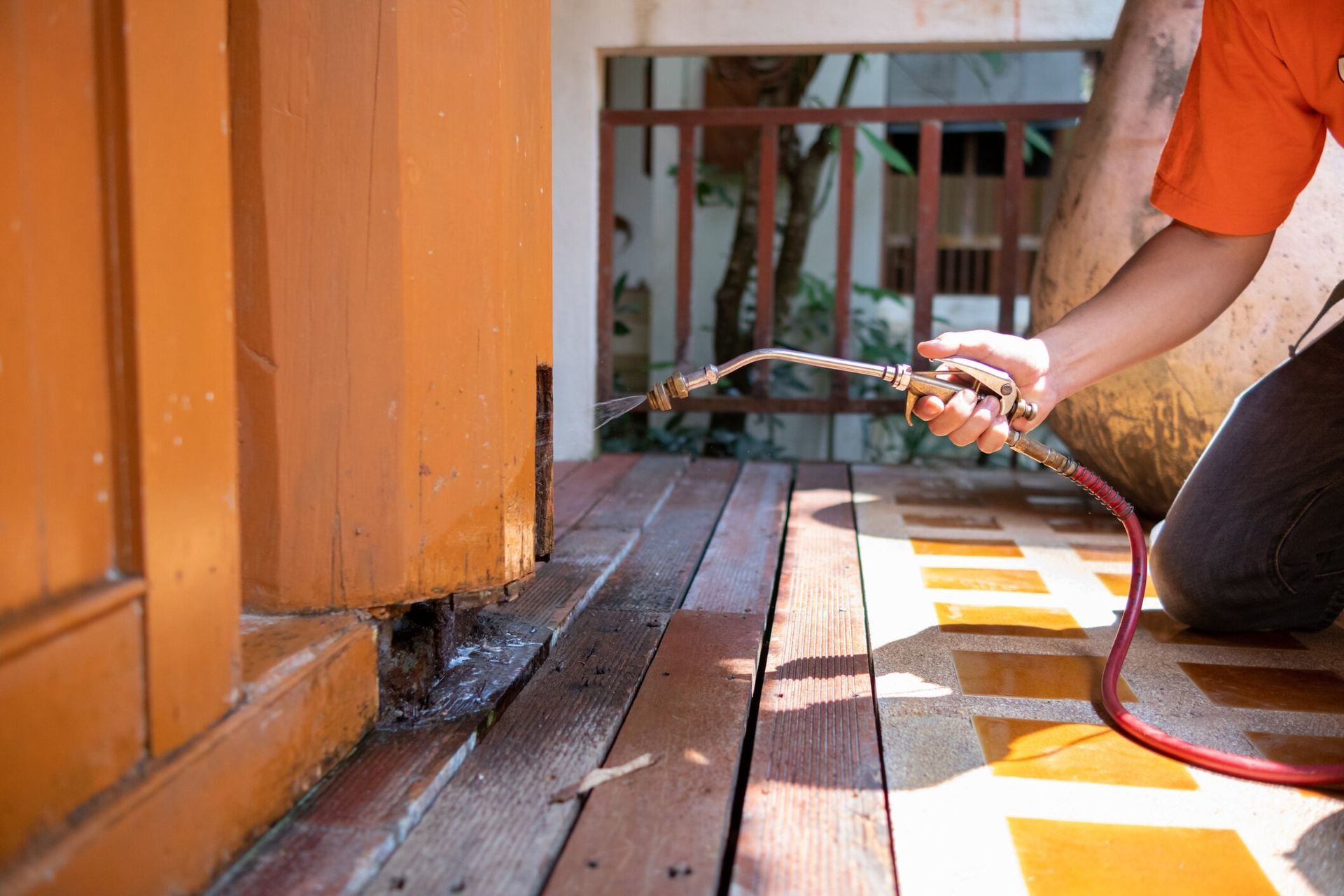
This is why understanding the different types of termite treatment is critical. You need a strategic approach. It starts with comprehensive termite inspections to locate the hidden entry points and assess the exact species attacking your property. From there, technicians deploy targeted termite control systems, either undetectable liquid barriers or advanced baiting stations, designed specifically to leverage that slow-kill transfer effect.
Are you dealing with termites in Dubbo or the Central West? Don't waste time with surface sprays. You need the right science to kill the queen and shut the colony down for good, so get in touch with Dentec Pest Management today.