Termite Damage vs Wood Rot: How to Tell the Difference
Key Takeaways
- Wood rot is caused by fungi in damp conditions, while termite damage is caused by insects feeding on the timber, so the fix is completely different.
- Rotten wood tends to feel soft and crumbly, while termite-damaged wood often sounds hollow or papery when tapped.
- Mud tubes, mud specks and mud-lined tunnels point to termites, not rot.
- If you can't tell, a licensed technician from our termite control team can assess it for you.
Termite Wood Damage vs Wood Rot: Why the Difference Matters
A little knowledge is a dangerous thing. It is true in so many areas of life and is perfectly applicable to termite infestations. These determined hordes of tiny, hungry creatures can destroy property while the householder is blissfully unaware they have a bad situation on their hands.
Spotting a problem like termite wood damage is the first step towards solving it, but how many people really know the signs to look for?
Wood Rot Versus Termite Wood Damage?
Let's face it, wood rots for a variety of reasons. It is a glorious material that has served mankind well for thousands of years, but it has a limited life. That can mean when you see what looks like rot in your house, yard buildings or trees, you may think it's nothing to worry about: just one of those things.
But what if it is not just simple rot? What if it's termite damage? That would mean it's going to carry on and get worse until you do something about it. It's an issue that needs to be nipped in the bud.
Termite Damage vs Wood Rot at a Glance
| What to check | Wood rot | Termite damage |
|---|---|---|
| Cause | Fungi that thrive in damp conditions | Termites feeding on the timber |
| Feel | Soft, spongy and crumbly | Hollow or papery when you tap it |
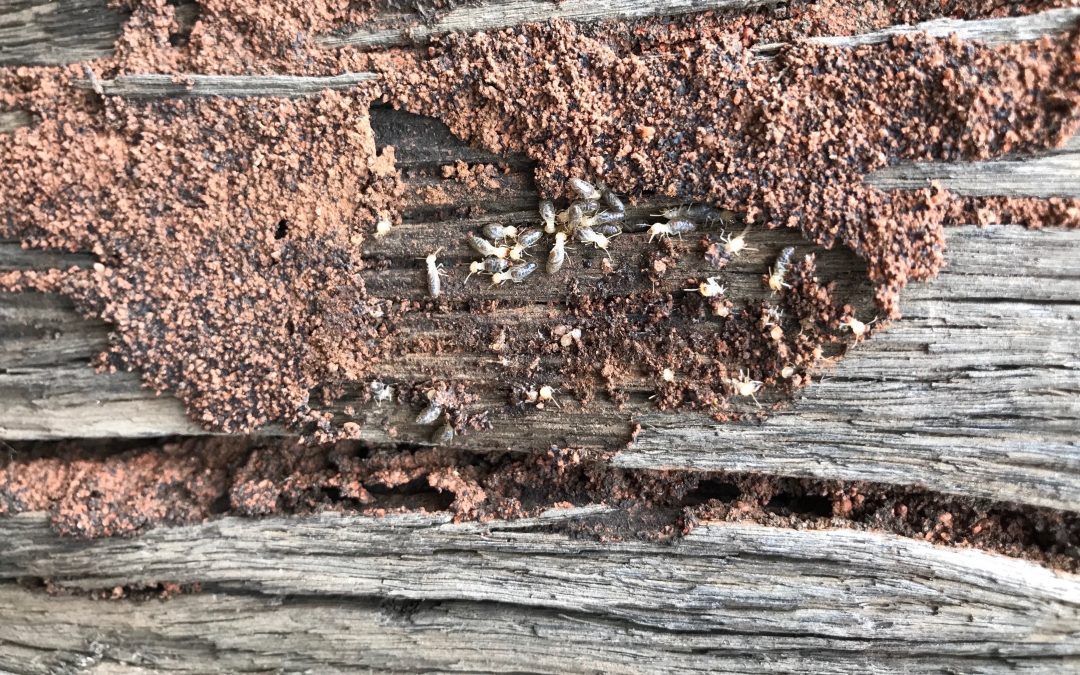
| Look | Discolouration, cracking and sometimes visible fungal growth | Mud tubes, mud specks and tunnels lined with mud |
| Smell | Often musty | No musty smell unless rot is also present |
| Fix | Remove the moisture source, then repair | Professional termite treatment before any repairs |
How to Tell Termite Damage From Wood Rot
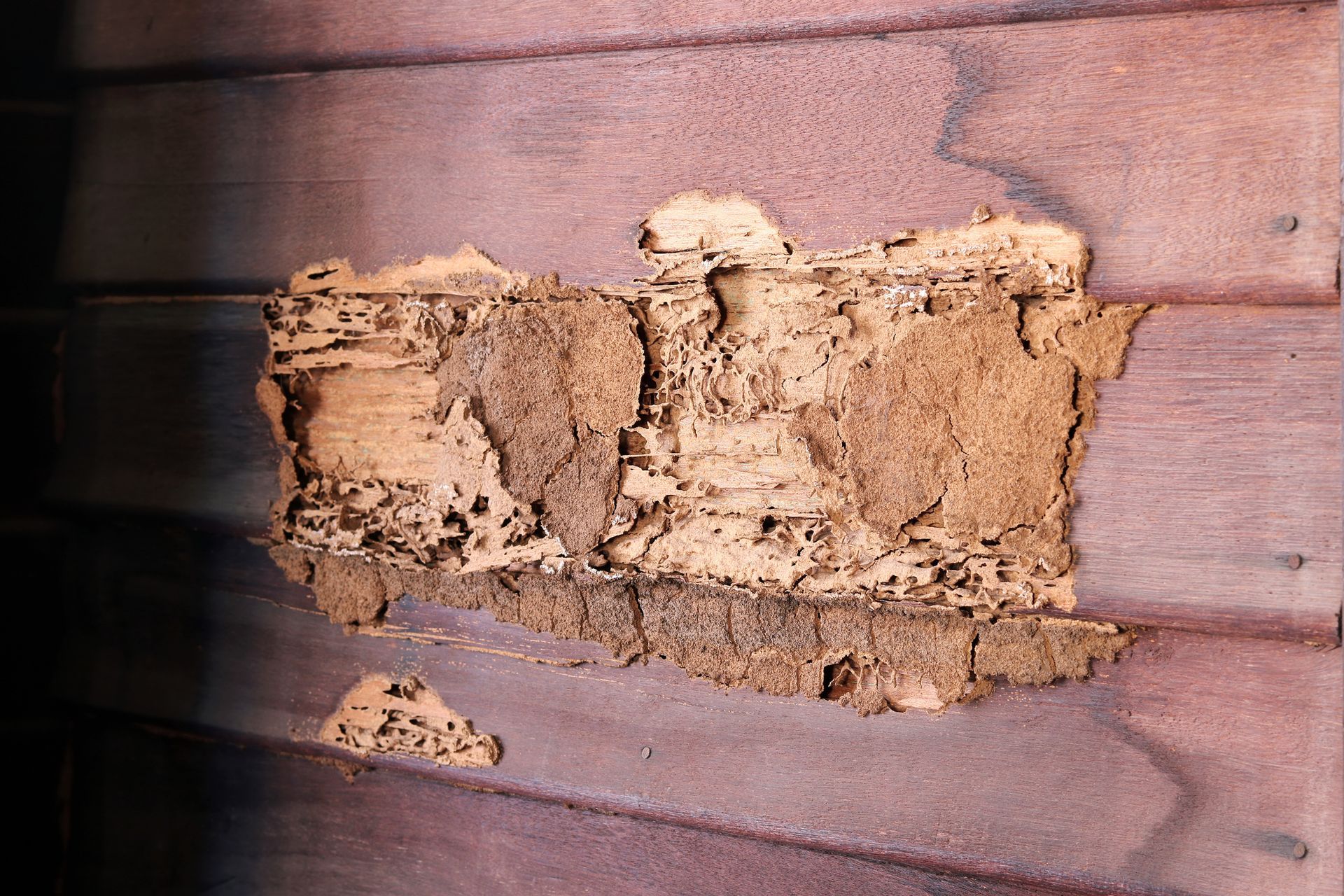
Termites eat wood from the inside out, so the surface can look fine while the timber is hollow. Rot, on the other hand, usually shows on the surface first, where the wood has stayed wet.
Signs of Wood Rot
- Timber that feels soft, spongy or crumbly
- Discolouration, cracking or visible fungal growth
- A musty smell
- Damp wood near leaks, gutters or poor drainage
Signs of Termite Damage
- Small, unexplained brown mud specks on skirting boards, architraves or cornices
- Blistering paint that looks exactly like water damage
- Timber that sounds papery or hollow when tapped with a screwdriver handle
- Small mud tubes tracking up your exterior brickwork from the soil
- Doors that won't close, windows that jam and floorboards that feel spongy or bouncy
Be careful, because the two problems can overlap. Termites love damp timber, so a leak that starts rot can also attract a colony. Our guide to early vs late stage termite damage shows how the signs change over time.
Where to Check Around Your Home
- Skirting boards, architraves and door and window frames
- Timber in the subfloor, especially near damp soil
- Decking, pergolas and fence posts
- Garden stumps, sheds and other outbuildings
Check these spots every few months. Tap anything that looks fragile and note any mud, bubbling paint or soft patches. Photos make it easier for a technician to see how a problem has changed over time.
Who Really Knows What Termite Wood Damage Looks Like?
You can look it up online and get a general idea. People do that all the time nowadays. Whatever problem you have, from health issues to DIY projects they're not qualified to deal with, the foolhardy will look it up, get someone's opinion and base their actions on that.
Unfortunately, that doesn't always work. Certainly, in the case of termite damage vs wood rot, what you need is a proper assessment. We at Dentec Pest Management know plenty about termite nests, so let us have a look.
What a Termite Inspection Covers
A termite inspection from our licensed technicians checks:
- All accessible areas inside, outside, in roof voids and beneath subfloors
- Garden borders, trees, stumps and fence lines
- Hidden spaces, using thermal imaging cameras, motion detectors and moisture meters
- Moisture problems and other defects that attract pests, explained in a written report
If it turns out to be just some kind of rot, you can do what you think best about it. But if it is termites, that's our department. We will talk you through exactly what we found, what it means for your home and what needs to happen next, so you can decide with the full picture.
What to Do If You Find Damaged Timber
- Tap the timber with a screwdriver handle. If it sounds papery, empty or hollow, the inside may be gone.
- Look for mud tubes, mud specks or tunnels lined with mud.
- Don't break open the wall or spray anything. Disturbing termites can make them relocate deeper into your house.
- If the wood is soft and damp with no sign of termites, find and fix the moisture source, such as a leak or blocked gutter.
- Not sure? Call us, email us or use the online booking form.
If it is termites, we will spring into action on your behalf with targeted termite treatments, stopping the little critters in their tracks and seeing if there are other parts of your property that are vulnerable too.
Whatever you decide, don't leave it. Rot spreads while the moisture stays, and termites keep feeding while nobody is looking. The sooner a technician sees it, the more of your timber you are likely to save.
Frequently Asked Questions
How can I tell if it is termite damage or wood rot?
Tap the timber. Termite-damaged wood often sounds hollow or papery, and you may see mud tubes, mud specks or mud-lined tunnels. Rotten wood tends to feel soft, spongy and crumbly, and it may smell musty. If you can't tell, a licensed technician can assess it properly.
Can termites and wood rot happen at the same time?
Yes. Damp timber attracts termites, so a leak that causes rot can also bring a colony. That is why finding soft, wet wood is a good reason to book an inspection, not just a reason to fix the leak. Treat the termites first, then repair.
Does wood rot attract termites?
It can. Termites favour moist timber, so wood weakened by rot is an easy target. Fixing leaks, clearing blocked gutters and improving drainage reduces the risk, but it won't remove a colony that has already moved in, so book an inspection if you see signs.
Should I repair the wood before treating termites?
No. If termites are the cause, the colony needs professional treatment before any repairs, otherwise they can keep feeding and damage the new timber too. Don't disturb the area in the meantime. Contact us and we will inspect the property and explain what we find.
Book a Termite Inspection in Dubbo
Not sure whether it's termites or rot? Let us take a look. Book online, send us an enquiry or call our licensed pest technicians on 02 6887 2825.